Guides
Banquet Beverage Package Pricing: How to Set Open Bar Rates
Banquet beverage package pricing starts with what the bottle actually costs you. Here are per-guest open bar rates, host bar math and where the margin goes.
What to take away
- A four-hour open bar typically runs $28 to $55 per guest in US banquet work, with the spread driven by pour cost, license type and staffing ratio.
- Liquor itself is rarely the biggest line. Bartender labor, glassware, insurance and the license amortization often add 40 to 60 percent on top of product.
- A consumption bar almost always beats a flat open bar on guest count under 80, because the host pays only for what is poured.
- Batch size changes the math fastbuying by the case versus the bottle can cut product cost 15 to 25 percent, but only if you can rotate stock across events.
- Price the package per guest, then reconcile against actual bottles after the event. The gap between the two is where your real margin lives.
What the figure covers
A quoted per-guest beverage rate is a bundle. It includes the liquor, beer and wine poured, the mixers and garnish, the ice, the glassware, the bartender hours, the liability insurance rider, and the amortized cost of the license that lets you pour at all.
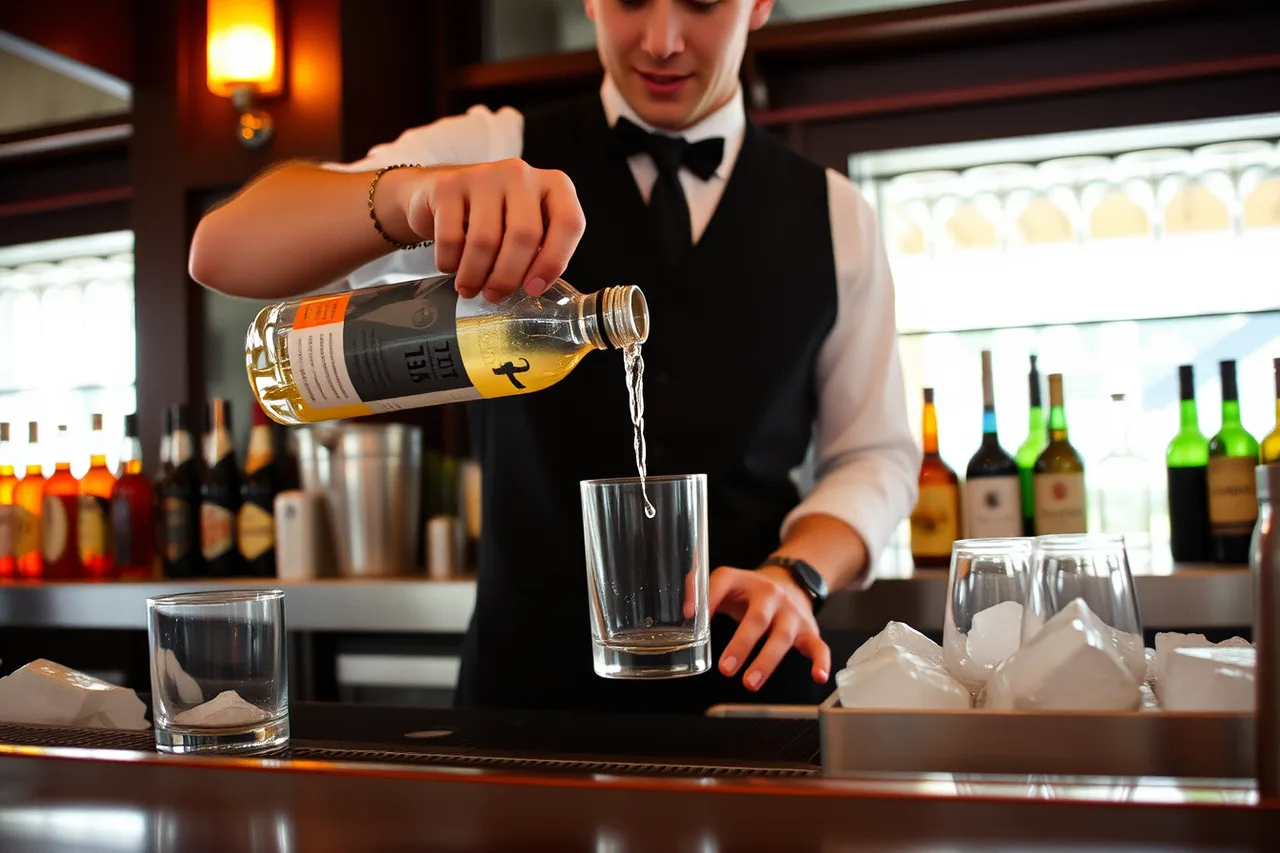
Caterers who quote only the bottle cost and then bolt on labor get surprised. The add-ons are not small. A single bartender for four hours at a US banquet rate of $22 to $30 per hour, plus payroll taxes, is $110 to $160 before tips.
Line by line per guest
The table below is illustrative for a four-hour event with beer, wine and a three-cocktail well list. Figures are ranges, not quotes.
| Cost line | Low per guest | High per guest |
|---|---|---|
| Spirits, beer, wine (well and house) | $9 | $18 |
| Mixers, garnish, ice | $2 | $4 |
| Glassware rental and breakage | $2 | $4 |
| Bartender labor (1 per 75 guests) | $4 | $8 |
| Liability insurance rider | $1 | $3 |
| Liquor license amortization | $1 | $4 |
| Waste, spillage, overpour allowance | $2 | $5 |
| Total product and service cost | $21 | $46 |
Add your target margin. At a 30 percent margin, the sell price lands near $30 to $66 per guest. Most US banquet houses settle in the $28 to $55 band and adjust for the venue and the guest list.
What scale changes
Volume moves two lines hard. Product cost drops when you buy by the case or negotiate a house account with a distributor. A case of well vodka at 12 bottles can run 15 to 25 percent below single-bottle pricing, and that saving compounds across a season.
The second line is labor. One bartender per 75 guests is a common planning ratio for beer, wine and simple cocktails. Push past that and you either add staff or slow service, and slow service shows up as complaints, not as a lower cost.
Batch size also changes spoilage. Open a case for a 60-guest event and you carry the remainder. If you cannot rotate it into the next event within a few weeks, the case discount is a loss.
What is easy to forget
Licensing is the line most caterers underprice. A full liquor license in a control state can cost thousands per year, and the fee structure varies by state and city. The state-by-state license cost breakdown is worth reading before you set a rate, because a $4,000 annual fee spread across 40 events is $100 per event before a single drink is poured.
Service charges and gratuities are a second trap. If you label a mandatory charge a service charge, the IRS treats it as wages, not a tip, and it is subject to payroll tax and withholding. The IRS guidance on service charges and tips explains the distinction, and the FLSA definitions cover how wages and tips are defined for your staff.
Insurance is a third. A liquor liability rider for a catered event is not optional in most commercial venues, and the premium scales with guest count and bar type.
Where the margin actually goes
The margin on a beverage package is not in the bottle markup. It is in the gap between what you charge per guest and what you actually pour.
Run the numbers after every event. If you charged $40 per guest for 150 guests and poured $3,200 in product, your product margin is strong. If you poured $5,100, the package was underpriced or the bartenders overpoured.
The single most useful habit is a post-event bottle count. It turns a guess into a number you can price against next time.
Pour cost targets of 18 to 24 percent of beverage revenue are a common industry benchmark, though the right figure depends on your market and your license cost. Track it per event for a season before you trust it.
Example
A 120-guest wedding with a four-hour open bar. Product cost comes in at $2,400. Mixers and ice add $360. Glassware rental is $280. Two bartenders for five hours (including setup) cost $310 with taxes. The insurance rider is $180. License amortization is $120.
Total cost is $3,650, or about $30 per guest. At a $46 per guest sell price, revenue is $5,520 and gross margin is $1,870, roughly 34 percent. Drop the guest count to 70 and the same package loses money on labor, which is why consumption bars exist. The catering quote template with pricing examples shows how to present both options side by side so the client chooses.
Common questions
What is a typical open bar cost per guest in the US?
Most full-service banquet bars land between $28 and $55 per guest for four hours, depending on the pour list, the market and the license cost. Beer and wine only often runs $15 to $28.
Should I quote a flat open bar or a consumption bar?
Flat pricing protects your revenue and is easier for the client to budget. Consumption pricing wins on smaller events, usually under 80 guests, where a flat rate would overcharge relative to actual pours.
How do I handle the service charge on a bar package?
Decide whether the charge is a service charge or a gratuity before you print the contract. The tax treatment differs, and mislabeling creates payroll problems later.
How many bartenders do I need per guest?
One bartender per 75 guests is a solid starting ratio for beer, wine and simple mixed drinks. Add a bartender for every 50 guests if the menu includes shaken cocktails.