Guides
A catering business plan: the sections a lender expects to see
A useful answer to 'catering business plan' starts with the work the team must deliver reliably, not with a borrowed benchmark. This guide treats the topic as a.
What to take away
- A catering business plan is a credit file first. Put the executive summary and the loan request at the front, not in an appendix.
- Ten sections satisfy an underwritersummary, company description, market analysis, service and menu, operations, marketing, management, financial projections, loan request, supporting documents.
- Projections run three years, with monthly detail in the first. Cost lines must tie to real documents, not estimates.
- Every claim needs a document behind itlicense, lease, insurance certificate, contract, or tax return.
- The percentages below are typical U.S. ranges, not targets for one operation.
Lender-Expected Plan Sections
- Executive summaryone page, request first
- Company description and ownership
- Market analysis by occasion
- Licenses and food safety rules
- Financials and repayment source
Lead with the loan request
Lenders read a catering plan as a credit file. The answer belongs on page one.
State the amount, the term, and the monthly payment. Break the use of funds into equipment, build-out, working capital, and marketing.
As of 2026, SBA 7(a) loans can reach $5 million. SBA 504 loans can reach $5 million, or $5.5 million for certain manufacturing and energy projects. The SBA business guide sets out the planning, launch, and finance activities underwriters expect to see documented.
SBA 504 commonly requires a 10% down payment, and other programs vary. Confirm current terms with a lender instead of reusing an old figure. Any build-out line should point to signed terms, and lease costs and site requirements covers the clauses lenders question.
Financial projections a lender will test
Supply three years, with the first 12 months broken out monthly. Include a profit and loss statement, a cash flow statement, and a balance sheet.
Show revenue by occasion, then food cost, labor, rent, vehicle, insurance, and loan payments.
Typical shares of catering revenue sit in these ranges:
| Line | Typical share of revenue | What drives it |
|---|---|---|
| Food and beverage cost | 25% to 35% | menu mix and guest count |
| Labor | 20% to 30% | service style and headcount |
| Prime cost, food plus labor | 55% to 65% | the ratio lenders track |
An illustrative projection uses $600,000 of revenue, food at 30% ($180,000), and labor at 25% ($150,000). Prime cost lands at $330,000, or 55% of revenue.
Add a sensitivity table for a 10% drop in weddings or a 10% rise in food cost. Show break-even event count, average order value, and collateral. Prime cost decides how much room a price change has, and catering pricing and profit covers where that room comes from.
The remaining sections, in order
Company description comes next. Name the legal entity, the owners and their percentages, and the years in business. Add the commissary address, service area, and key resumes.
Market analysis tests demand by occasion. Business meals, weddings, conferences, and memorials run on separate calendars. Venue bookings and repeat corporate accounts are the evidence that counts.
The service and menu plan builds the first menu around shared ingredients, equipment, labor skills, and holding temperatures. Transport and service conditions decide whether the kitchen can repeat the work.
The operations plan models usable kitchen, refrigeration, hot holding, packing, and vehicle hours. Include changeovers, cleaning, breaks, and rework. Do not plan every station at theoretical maximum output.
The marketing plan names each channel with a target and a cost per lead. Signed letters of intent and venue contracts outweigh social follower counts.
The management plan lists the owner, event manager, chef, sales coordinator, and scheduler, each with a backup. Staffing assumptions drive the labor line, and hiring and training a team covers certification and coverage costs.
Document checklist for the appendix
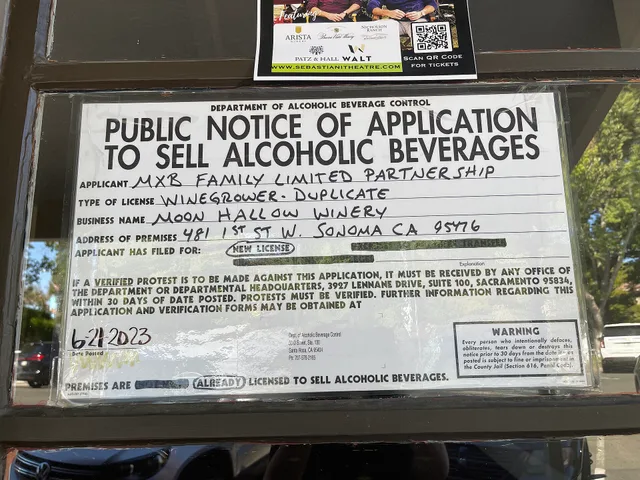
- County health department license and any alcohol permit
- Business license and certificate of occupancy for the kitchen
- Insurance certificates: general liability, liquor liability, workers compensation
- Lease or commissary agreement, plus equipment quotes
- Signed contracts, letters of intent, or a repeat client list
- Personal financial statements and two to three years of tax returns
- Owner resumes and food safety certification
Example: a first loan request
An illustrative caterer holds 40 booked events at an average of $4,500, or $180,000 of contracted revenue. The request is $90,000: $55,000 for hot holding and refrigeration, $25,000 for build-out, $10,000 for working capital.
The repayment source is event gross profit, not optimism. Underwriting looks for the deposit schedule and the cash that arrives before each event.
Verifying licenses and food safety rules
Food-business requirements depend on the product and the facility. Most retail food establishments answer to state and local government rather than registering with FDA, per the FDA guidance on starting a food business.
The FDA Food Code is a model for retail and food-service safety. It names catering operations, transport vehicles, and central preparation facilities, and enforcement depends on local adoption. See the FDA Food Code 2022.
Match each license to a line in the plan. Read the licensing and compliance steps before you assemble this section, because permits are the first item a credit officer checks.
License and Safety Verification
- Check FDA food business start guide
- Confirm state and local permits
- Review FDA Food Code 2022
- Verify local adoption of food code
- Document catering transport and prep rules