
Guides
Seattle catering under Washington waste and permit rules
Catering company operations in Seattle face strict food waste, composting, and health permit rules that directly shape banquet costing and margins.
What to take away
- Catering company operations in Seattle must separate compostable food waste under city and state rules.
- Washington health permits require a plan review, certified food protection manager, and annual fees.
- Compliance steps include registering with the health department and setting up compost collection.
What Seattle and Washington waste rules require of caterers
Seattle and Washington set food waste rules that apply to catering company operations. The city requires businesses that generate food waste to separate compostable material. Washington state law also sets organic waste diversion targets for large generators. Caterers serving events in Seattle must plan for compost collection at venues and kitchens.
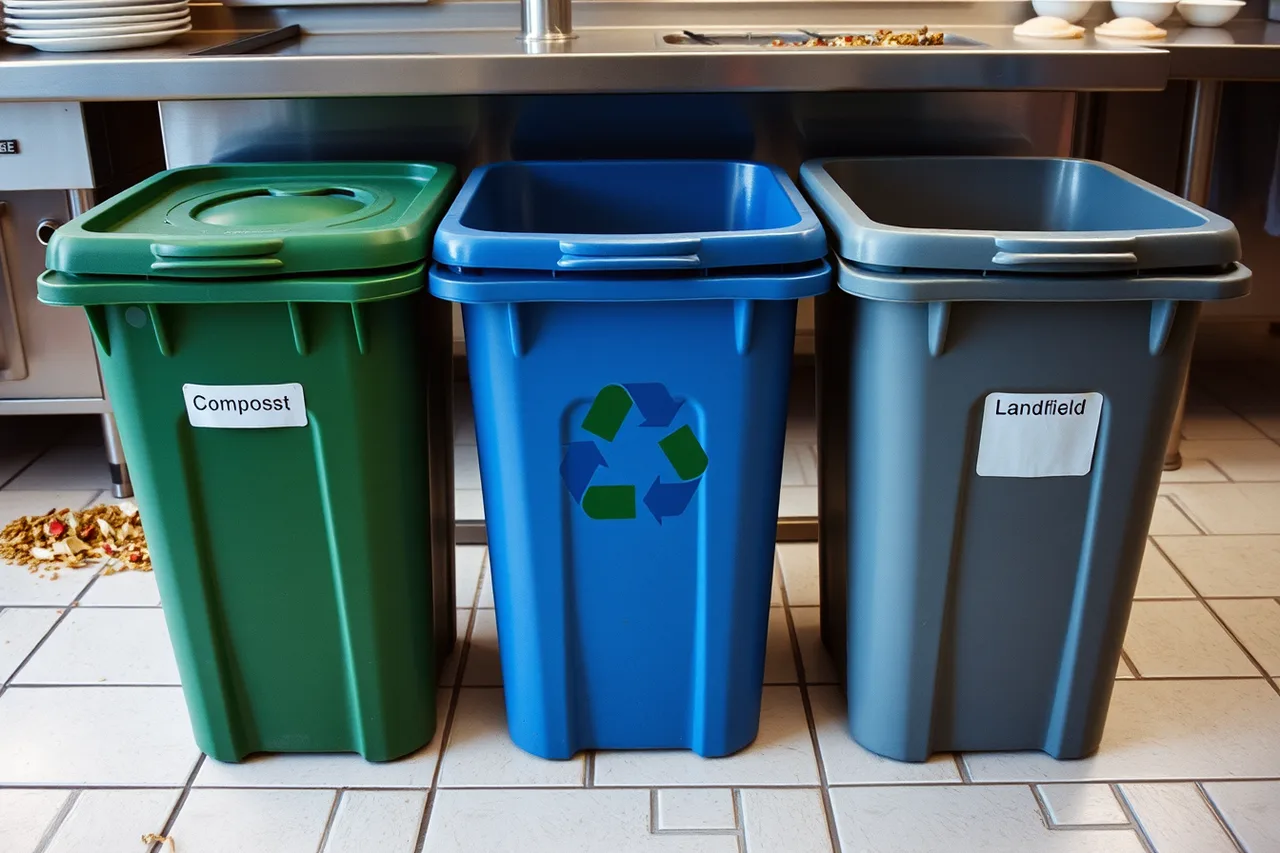
Food waste rules cover unused food, prep scraps, and compostable serviceware. Seattle Public Utilities enforces the city's waste separation requirements. A caterer that fails to separate compostables can face warnings and fines. The rules apply to both permanent kitchens and temporary event sites.
Penalties are a warning first, then $50 and $100 under Seattle Municipal Code 21.36.082.
The Land, Waste, and Cleanup Topics | US EPA page outlines how waste is classified and managed. Caterers can use it to sort food waste, recycling, and landfill streams. This matters when a venue has limited bin space. For a broader startup view, see the catering compliance checklist.
Seattle's waste rules also cover cardboard, glass, and recyclable containers. Caterers must keep those streams separate from food waste. Mixed bins can trigger a notice from the hauler. Training new staff on a three-bin setup takes time, but it prevents repeat violations.
Washington's waste rules also interact with local venue contracts. Some Seattle venues require caterers to use specific compost haulers. Others charge a waste fee per event. Caterers should read venue agreements for waste clauses before quoting a banquet.
Composting and food waste requirements in Seattle
Seattle's composting rules require food service businesses to compost food scraps and compostable paper. The city bans compostable items from the garbage. Caterers must provide labeled compost bins in kitchens and at event sites. Staff need training on what goes where.

Seattle Public Utilities offers technical assistance and signage for food waste compliance. The city also requires annual waste reports from some businesses. For caterers, the key is to track compost volume per event. That data feeds directly into banquet costing.
Compost collection costs vary by bin size and pickup frequency. A 1-yard compost bin from Recology or Waste Management typically rents for $40 to $100 a month, with each pickup $30 to $70. Larger 2-yard to 4-yard bins cost more.
A caterer running several events a week may need daily pickup. Smaller operations can share a hauler schedule with neighboring businesses. Both options should be priced before a bid goes out.
Compostable serviceware must meet ASTM standards to be accepted. Not all "biodegradable" plates qualify. Caterers should confirm supplier certifications. The stock control checklist helps track these items and avoid overordering.
Seattle's rules also affect off-site events in parks and public spaces. Permits for those events may require a waste management plan. The plan must name the hauler and describe bin placement. Caterers should build this into event planning timelines.
Food donation is another option under Washington law. The state encourages donation of surplus edible food. Donors may receive liability protection under federal and state law. Caterers can reduce waste costs by donating rather than disposing.
Washington health permit requirements for catering operations
Washington health permit requirements for catering operations start with a food service permit from the local health department. In Seattle and King County, that is Public Health - Seattle & King County. A catering company operations permit covers the main kitchen and any satellite sites.
A plan review is required before opening or remodeling a kitchen. The review checks layout, plumbing, ventilation, and equipment. Fees vary by jurisdiction and kitchen size.
Public Health - Seattle & King County bases the annual food service permit fee on risk category and seating or square footage. Typical fees run from about $500 to $2,000 a year. Plan review for a new or remodeled kitchen typically costs $700 to $1,500.
The City of Bellevue and other King County cities contract with the same health department for permitting, so the health fee is similar across most of the county. After approval, the health department issues the permit.
Each food service establishment must have a certified food protection manager on staff. Washington requires this person to pass an approved exam. The Food Code 2022 | FDA sets the model rules that state and local codes adopt. Washington's food code is based on that model.
Temporary food service permits apply to booths and stands at fairs and markets. Seattle event catering often requires one for each day of operation. The permit lists the menu, water source, and waste plan. Applying late can delay setup.
The permit must be posted at the operation. Inspections occur at least once or twice a year, depending on risk. Critical violations can lead to reinspection fees or closure. Caterers should keep inspection reports on file for venue clients.
For a step-by-step opening path, see the licensing and compliance steps guide. It covers permits, inspections, and local business licenses. Washington also requires a business license and, for some events, a temporary food service permit.
How waste and permit compliance shows up in banquet costing
Waste and permit compliance creates cost lines in banquet costing. These include compost hauling, landfill hauling, recycling, and serviceware. Permit fees, inspection fees, and training also belong in the cost model.
A caterer should separate fixed waste costs from variable ones. Fixed costs include monthly bin rental and base hauling. Variable costs depend on event size, menu, and compost volume. Tracking both improves profit margins.
Permit costs are mostly fixed and annual. Plan review fees and certified manager training are one-time or recurring. Allocating them across events requires an estimate of annual event volume. That allocation belongs in the overhead section of banquet costing.
Venue waste fees are often passed through per event. Caterers should confirm whether the venue charges a waste surcharge. If so, add it to the client quote as a separate line. This keeps margins intact.
What a waste line looks like in a quote
A quote can show waste as a per-person charge or a flat event fee. Per-person works when menus are similar across events. A flat fee suits events with heavy prep or long service windows. Either way, the line should be visible to the client. Hidden costs erode trust and margins.
For a 150 guest event, a typical waste line might read: $2.50 per person, or $375, plus a $75 flat hauling fee, for a total of $450.
EPA guidance for caterers includes the Compliance | US EPA page. It explains how to meet environmental obligations and avoid penalties. For a deeper look at sourcing, see inventory and sourcing.
Reducing waste cost without breaking compliance
Reducing waste cost starts with menu planning. Smaller portions and fewer garnish items cut food waste. Reusing trim in stocks and sauces lowers disposal volume. Accurate forecasting prevents overproduction. Menu engineering is the cheapest fix of all. Review which items come back untouched after events and shrink or cut them.
Inventory control reduces spoilage and expired stock. The stock control checklist can help set par levels. Ordering compostable serviceware in bulk lowers unit cost. But storage space and shelf life must be considered.
Donation programs can turn surplus into tax deductions. Washington and federal law provide liability protection for food donors. Caterers should partner with a local food bank. This reduces disposal fees and supports community relations.
Staff training is a low-cost compliance tool. Train servers to separate compost at events. Use clear signage at bins. Appoint a waste lead for each event.
Compliance steps for Seattle caterers:
- Register your kitchen with Public Health - Seattle & King County and complete plan review.
- Obtain a certified food protection manager credential for at least one staff member.
- Set up compost, recycling, and landfill collection with an approved hauler.
- Train staff on Seattle's food waste separation rules and compostable serviceware standards.
- Track waste volumes and permit costs per event for banquet costing.
Checklist for Seattle catering compliance:
- Food service permit posted at the operation.
- Certified food protection manager on staff.
- Compost bins labeled in kitchen and at event sites.
- Waste hauler contract includes compost collection.
- Compostable serviceware meets ASTM standards.
- Waste and permit costs included in banquet quotes.
- Annual waste report filed if required.
The Regulatory Information By Business Sector | US EPA page covers food service and helps caterers identify which environmental rules apply.